A 501(c)(3) (Applied For) ·  Washington, D.C. and Madison, WI
Affordable for American nonprofits No admin fees on donations impactmatrixfoundation.org
Fund affordable coordination access for an American nonprofitDonate
ImpactMatrix Foundation —  Washington, D.C. and Madison, WI

Strengthening American Nonprofits.
Democratizing Coordination.
Building Community.

ImpactMatrix is built for cross-sector community coordination across the United States. The Foundation ensures American non profits can access solutions affordably — strengthening the daily infrastructure of democracy, one community at a time.

Built for cross-sector coordinationDonated to Non ProfitsDaily infrastructure of democracy
01 · The Foundation
A moral access layer — ensuring every American nonprofit can coordinate, regardless of budget.
02 · The Platform
Built for cross-sector community coordination across nonprofits, private sector, government and institutions.
03 · The Thesis
Democracy is built between elections — through the daily habit of solving problems together.
— 01The Problem
01 — The Problem

American communities already havewhat they need. Coordination is what's missing.

The challenge isn't generosity. It's fragmentation. Resources exist. Needs are real. Without shared coordination, communities lose time, trust, and momentum.

From rural counties to major cities, nonprofits, schools, local governments, and volunteers are already working toward the same goals. Without a shared coordination layer, invisible needs, duplication, and missed handoffs weaken the civic trust American communities run on.

The Four Failures of Fragmentation

i.

Inefficient resource coordination

Without shared visibility, organizations duplicate effort while real needs go unmet — across the same neighborhoods, the same week.

ii.

Limited real-time visibility

County and state agencies can't see what's happening across the network — so decisions are made on stale data and gut feel, not real conditions on the ground.

iii.

Volunteer mobilization gaps

Willing American volunteers exist for everyday service and emergencies — but matching skills, time, and need is still done on spreadsheets, phone trees, and group chats.

iv.

Technology inequity

Only large organizations can afford modern coordination tools. The small nonprofits closest to American communities are left behind by the very technology designed to help them.

Communities cannot rely on outdated, siloed tools. They need a shared, trusted infrastructure that helps organizations work together seamlessly.
— The case for shared American civic infrastructure
— 02The Solution
02 — The Solution

Shared infrastructure for community action — underwritten for American nonprofits.

ImpactMatrix is built for cross-sector community coordination. The Foundation ensures American nonprofits have free or deep-discounted access — reported to participating nonprofits as a donation-in-kind for your records.

Together, they strengthen the civic infrastructure that American communities run on.

ImpactMatrix is built for cross-sector community coordination, and the Foundation ensures American nonprofits can access it and build their mission of community support.

The Two-Part Architecture

● ImpactMatrix Platform

Built for cross-sector coordination.

The full coordination engine — designed for nonprofits, institutions, local governments, counties, public-private coalitions, hospitals and health systems, smart city initiatives, mutual aid networks, disaster response, and civic engagement.

  • Real-time shared dashboard across organizations
  • Volunteer and resource matching at the speed of need
  • Annex T-aligned multi-agency coordination
  • Cross-agency civic data infrastructure
Commercial · Enterprise · Government
● ImpactMatrix Foundation

The moral access layer.

Ensures American nonprofits receive affordable full platform access — because community infrastructure should be shared. So community capacity is never limited by a software budget.

  • Affordable full platform access for qualifying American nonprofits
  • Direct donations to nonprofits — no admin fees
  • Incentive program for corporate-nonprofit relationships
  • Donation-in-kind documentation for nonprofit records
A 501(c)(3) (Applied For) · Donated to nonprofit community building
$

Direct donations to nonprofits

The Foundation provides functions for direct donations to nonprofit organizations. No administration fees. Every dollar reaches the mission you chose.

+

Corporate relationship incentives

An incentive program for nonprofits to strengthen their corporate relationships — turning one-time gifts into long-term coordination partnerships across American communities.

— 03The Democratic Thesis
03 — The Democratic Thesis

Democracy is built between elections.

Strong American communities are built through the daily habit of solving problems together. By making collaboration visible and actionable, ImpactMatrix strengthens civic trust, participation, and the democratic institutions that rely on local coordination to hold.

Healthy civic life depends on the daily ability of organizations, neighbors, and local institutions to solve problems together — strengthening trust, participation, and the shared habits that keep democracy resilient.

Democracy is built through the daily habit of solving problems together. Not once every four years — every day, in every neighborhood, through every organization that shows up.
— The Foundation's guiding conviction
Why this is our differentiator

Most civic technology positions ONLY around efficiency or disaster response. We position around democracy itself.

The daily coordination that makes American communities functional — not just the crisis coordination that makes them survivable. This distinction makes the Foundation fundable by a category of philanthropy most civic tech misses entirely.

● Aligned funders

Democracy & civic trust

Aligned community and democracy-focused foundations — funders who recognize that civic infrastructure is built through the daily habit of solving problems together, not through episodic intervention. The Foundation positions itself within this category of philanthropy, which most civic technology efforts miss entirely.
— 04The Coordination Flywheel
04 — The Coordination Flywheel

Bigger than disaster. Bigger than nonprofit-only.

One shared coordination layer. Five stages that repeat and compound — turning fragmented effort into visible, accountable American community action.

Each cycle builds civic trust, strengthens relationships, and improves the next response.

01

Needs Surface

Communities, nonprofits, and institutions identify what's needed and what's available — making invisible gaps visible across the entire network for the first time.

● SectorsNonprofits · Local governments · Schools · Residents
02

Resources Align

Volunteers, funding, goods, and services are matched to where they're needed most — automatically, in real time, without manual reconciliation.

● SectorsVolunteers · Funders · Corporations · Faith orgs
03

Partners Coordinate

Nonprofits, county and state agencies, schools, and businesses work from a shared real-time picture — no more silos, duplicate effort, or missed handoffs between organizations.

● SectorsCross-sector · Real-time · Shared dashboard
04

Action Happens

American community members are served faster, with less duplication and fewer gaps — because the coordination layer finally matches the complexity of real community need.

● SectorsDisaster response · Food access · Housing · Civic engagement
05

Learning Compounds

Every coordination cycle builds civic trust, strengthens relationships, and improves the next response — turning one-time coordination into permanent American community infrastructure.

↺ Feeds the next cycleCivic trust · Institutional memory · Resilience

The compounding principle

Each cycle strengthens the next. Coordination compounds over time — which is why this is infrastructure, not a service.

— 05Who We Serve
05 — Who We Serve

One platform. Two ways to access it.

ImpactMatrix serves every sector across the United States. The Foundation ensures qualifying community nonprofits access. Institutional and commercial partners access through ImpactMatrix and other platforms and organisations.

Platform Audiences (All Sectors)

  • i.
    Community nonprofitsHuman services, food security, housing, civic groups across American communities.
  • ii.
    VOADs & emergency networksFEMA Annex T-aligned multi-agency coordination and response.
  • iii.
    Local governmentsCounty and state emergency management, civic boards, social services.
  • iv.
    Universities & campusesU.S. service-learning programs and civic innovation labs.
  • v.
    Corporate community partnersEmployee volunteering, CSR tracking, corporate foundation giving.
  • vi.
    Hospitals & health systemsSurge capacity, community health coordination, public health partners.
  • vii.
    Mutual aid networksNeighbor-to-neighbor resource matching across American neighborhoods.
  • viii.
    Smart Community initiativesCross-agency coordination, resident services, civic data infrastructure.

Foundation Priority (Affordable Access)

● Foundation Priority

Nonprofits serving where the technology equity gap is widest.

Nonprofits receive platform access through the Foundation. Priority is given to organizations serving rural, low-income, or under-resourced American communities — where the technology equity gap is widest and the coordination need is greatest.

Rural countiesLow-income areasUnder-resourced regionsFirst-in-network nonprofits
— 06Long-Term Outcomes
06 — Long-Term Outcomes

The America we're building toward.

Civic infrastructure is judged not by quarterly metrics but by the durable habits and institutions it leaves behind.

Here is the long-term picture the Foundation is built to advance — measured in years, not months.

Four Long-Term Outcomes
i.

Stronger, more resilient American communities — with shared coordination infrastructure that compounds over time.

ii.

Increased civic participation and volunteerism across sectors — the daily American habit of showing up, scaled.

iii.

Reduced duplication of services and improved resource distribution — across the same network of organizations.

iv.

A replicable national model for statewide and U.S. nationwide expansion — civic infrastructure as a global movement.

— 07Founded By
07 — Founded By

American civic experience. One enduring conviction.

The ImpactMatrix Foundation is led by founders drawing on decades of public service, post-9/11 leadership, business and legal stewardship, and humanitarian coordination technology that has impacted millions of Americans.

Joseph W. Boucher

Joseph W. Boucher, JD, MBA, CPA

Madison, WI

Joe Boucher is a founding shareholder of the Madison law firm of Neider & Boucher, S.C.serving as the firm's Board Chair. Practicing law since January 1978, Joe emphasizes business legal planning for closely held businesses.

From 1980–2024 Joe also taught business law at the UW-Madison School of Business. He holds an MBA and JD from UW–Madison and is also a licensed Wisconsin CPA.

He has been instrumental in Wisconsin business entity law — chairing the committee that drafted the original limited liability company law in the state, and serving as a member of the committee that updated LLC law in 2022.
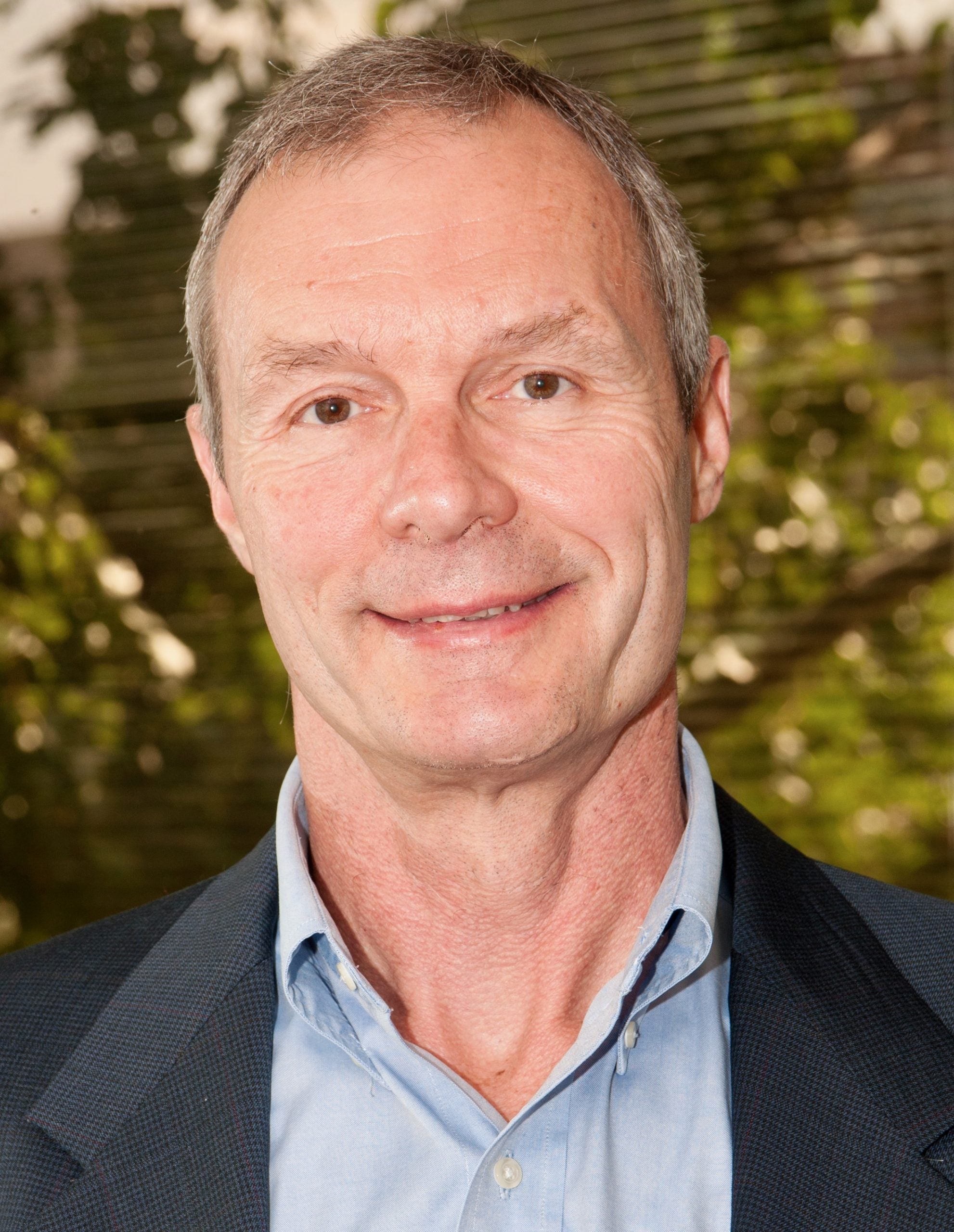
Governor Scott McCallum

Governor Scott McCallum, PhD

ImpactMatrix Foundation

With decades in public service and humanitarian innovation, Scott served as Wisconsin's 43rd Governor, leading technology-driven efficiencies and post-9/11 responses. He scaled Aidmatrixglobally, impacting millions, and was named a “Top 25 Doer” in U.S. technology and Ernst & Young Entrepreneur of the Year.
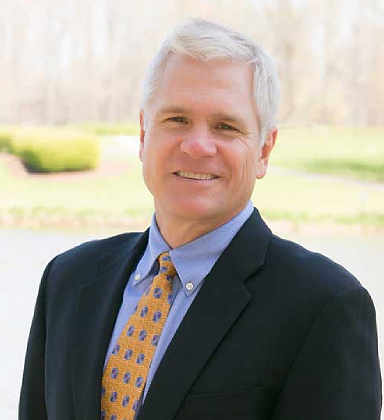
Holding a PhD in Integrated Communications focused on human capital, Scott drives the Foundation's vision: civic infrastructure that strengthens American communities every day.

William E. 'Rick' Peterson

William E. “Rick” Peterson

Washington, D.C. metro

Chairman of the Investment Board at Peterson Companies, overseeing all non-real estate assets including financial securities, private equity positions, and diversified lines of business. Rick's career at Peterson Companies spans 25 years, including roles as CFO, Co-Founder of Vizuri Health Sciences, and Senior V.P. of Asset Management for a 7-million-square-foot portfolio.

A veteran nonprofit board member, Rick has chaired Gleaning for the World and served on boards for The Methodist Church, The Northern Virginia Conservation Trust, Cardinal Bank, and others — bringing two decades of governance experience to faith-based and humanitarian organizations.

Leadership, Advisory Board & Donors

● Leadership · To be announced

Senior Leadership

Leadership announcement forthcoming.

● Advisory Board · To be announced

Advisory Board

Advisory board announcements forthcoming.

● Donors · To be announced

Donors

Founding donors and supporters forthcoming.

— FundingBoard-Directed Priorities
Board-Directed Priorities for Funding

Where the Foundation puts donor capital.

Three areas the Board has identified as priority funding focus. Donors may earmark to a specific priority — or contribute to the broader mission of building American communities through local involvement.

i.

Technology coordination tools for nonprofits

Provide support to American nonprofit organizations to cover the cost of technology coordination tools — closing the technology equity gap that leaves small nonprofits behind.

Direct underwriting of affordable platform access for qualifying U.S. nonprofits.
ii.

Tocqueville Civic Project

Funding to help American communities obtain "Smart Community" official certification — including Smart City advisory contracting, technical assistance, and marketing to build community involvement in nonprofit organizations.

Civic certification · advisory · technical assistance · community marketing.
iii.

Local nonprofit-business-government grants

Financial grants to American nonprofits strengthening ties to local businesses and local government — turning one-time partnerships into long-term coordination relationships.

Cross-sector relationship-building grants.
Donors may earmark donations for any of these priorities — or to gift a favorite American nonprofit organization in promoting the projects above. Suggestions are always welcome with ideas to build our communities through local involvement.
— 08Join Us
08 — Join Us

Help strengthen the infrastructure of American democracy.

ImpactMatrix is built for cross-sector community coordination. The Foundation ensures American nonprofits can access it affordably and accessible.

Together, they strengthen the civic infrastructure that American communities run on.

Three Ways to Engage

i.
For Nonprofits & Community Orgs

Join the Founding Network

Apply for affordable platform access. Be among the first American nonprofits in the coordination network — with onboarding, training, and 90-day technical assistance from day one.

ii.
For Foundations & Philanthropists

Fund Nonprofit Access

Your tax-deductible gift directly funds affordable platform access for American nonprofits who need coordination infrastructure. No admin fees on direct nonprofit donations.

Donate now
iii.
For Government, Institutions & Corporations

Become a Pilot Partner

Join the U.S. coordination ecosystem as a cross-sector partner — and strengthen the American communities you operate in. Counties, hospitals, smart-city offices and corporate partners welcome.

The infrastructure of democracy is built every day.

Whether you fund affordable access for American nonprofits, join the founding network, or partner as a community institution — every contribution strengthens the civic coordination American communities run on.